De reis van Barry/Joia/Plink
A comedic narrative title aiming to educate and entertain on the topic of climate in the Zeeland Delta Works. Available on itch.io.
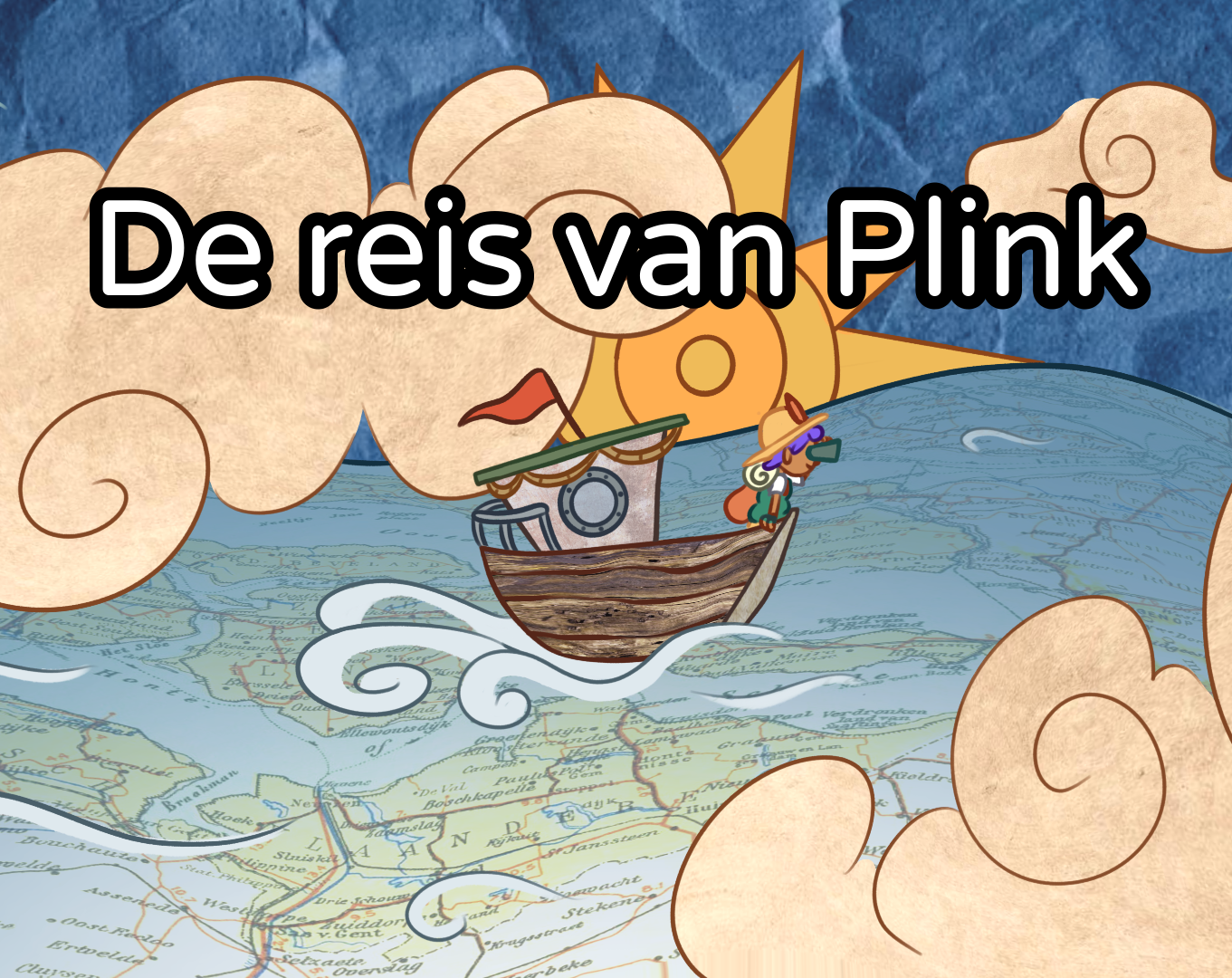
Team Project of 4
I focused on the game's structure and applied game design, sharing all other design, writing and development tasks with another teammate.
2026
10 weeks of development.Released on April 8th.
Godot
Github, Aseprite, Blender.
Summary & Overview
De reis van Barry/Joia/Plink is a narrative title/applied game made in assignment of our client Abe Hendriks, a researcher at Utrecht University. Together with one other design student and two artists, we built a full and cohesive narrative, three fictional locations based on research, and an original soundtrack to boot.
See also the trailer-video I put together!
Applied Game Design
Conceptualizing an Applied Game
While generally conceptualizing and the "starting a new project" design process matters a lot less when working in a team, it is essential when working on an Applied Game for a client. You have to figure out what exactly it is the client wants to achieve, and then every design decision has to reinforce that intended user experience, Design by Subtraction. I'd practiced and worked with this design philosophy extensively in the project before this one, which culminated in Minotauruss.
Researching the Topic
Our team put together a large Google Doc in which we constantly jotted down research, information and links. An example of something we enjoyed looking into was this page on water safety in the Netherlands.
Our client wanted to show players unfamiliar and hopeful futures for the Zeeland Delta Works, subverting their expectations. Together with our research we settled on creating a game where you'd personally explore a few of our researched solutions, in the form of separate villages and communities.
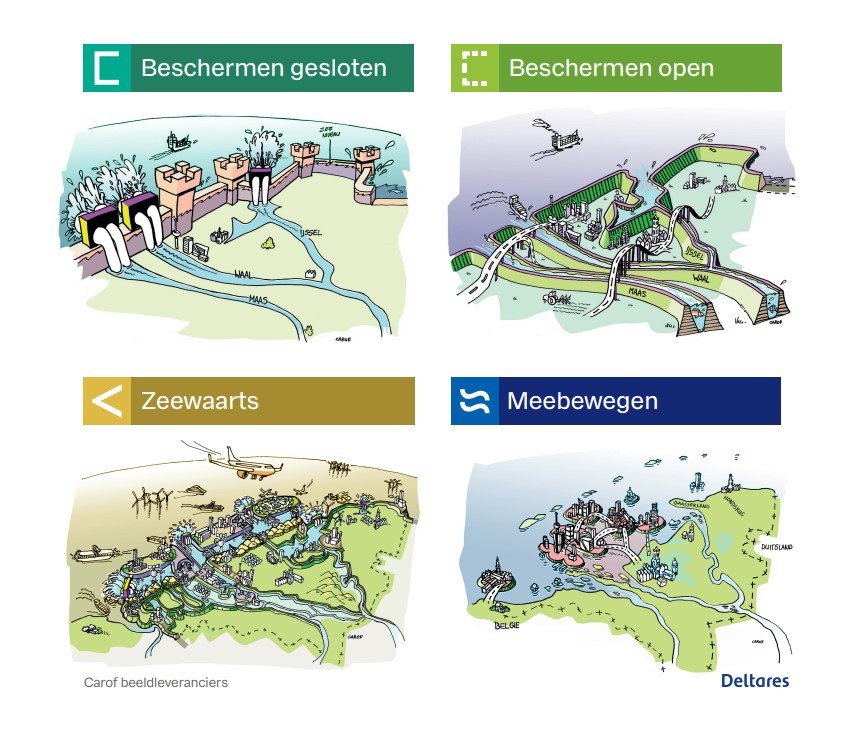
Four hypothetical solutions for keeping the Netherlands dry with the rising sea-level.
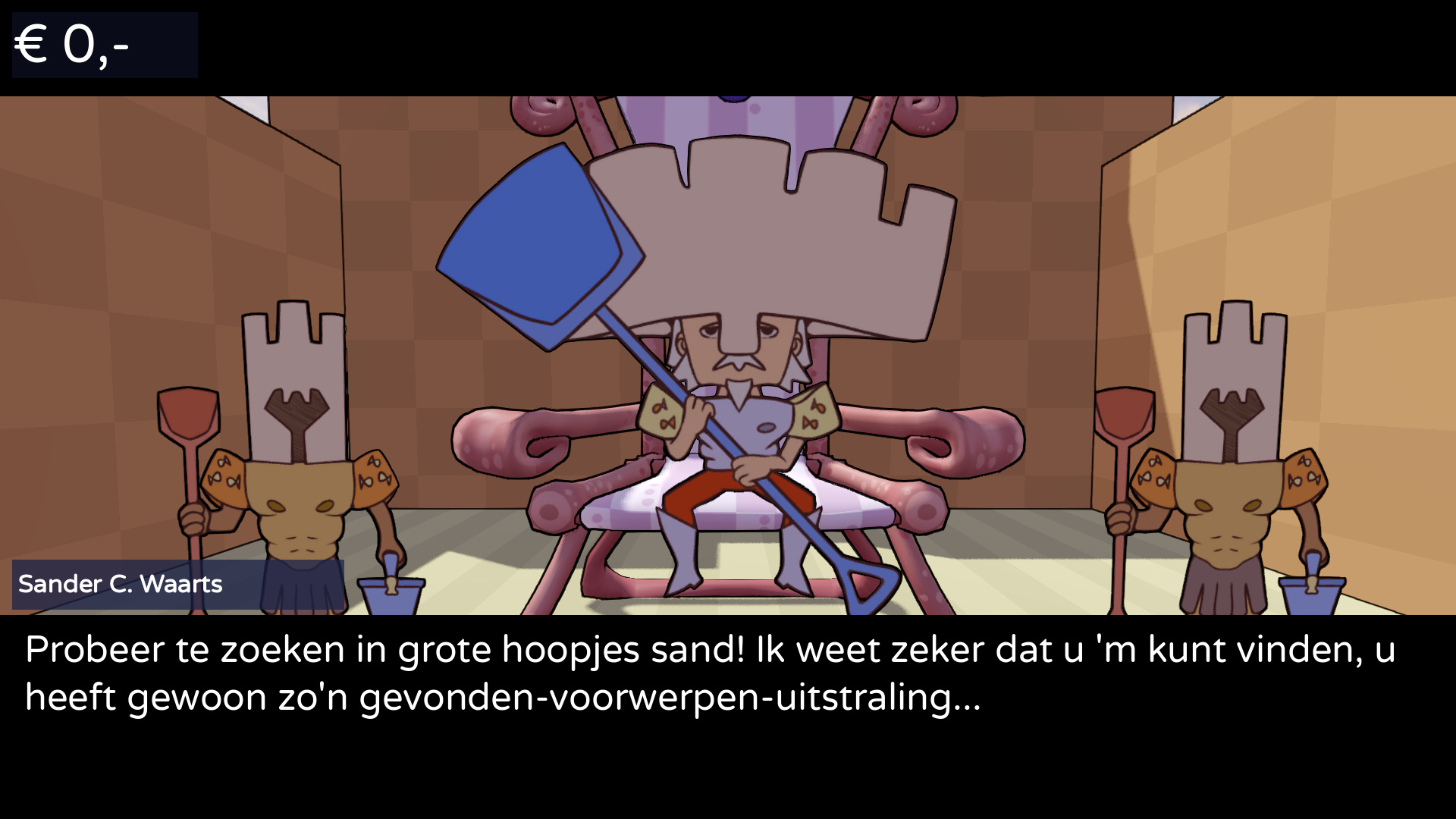
"Try searching in large piles of sand, you seem like you'd be good at that..."
Target Audience Considerations
Something I prioritized with the project was making sure the project remained accessible and intuitive, UX Design. As our game wasn't targeting a "gamer" audience, I formed a few design pillars early on to make sure the game remained simple and frictionless; Perfect grammar, automatic camera-control and a lot of "safety nets" for if the player ever got lost.
Entertainment Value
Something the entire team wanted to achieve with the project was making sure the game was still fun and lighthearted. We looked into ways of stimulating exploration and curiosity, and having there be funny dialogue to find everywhere definitely helped. Our game avoided the common applied game pitfall of "chocolate-covered broccoli".
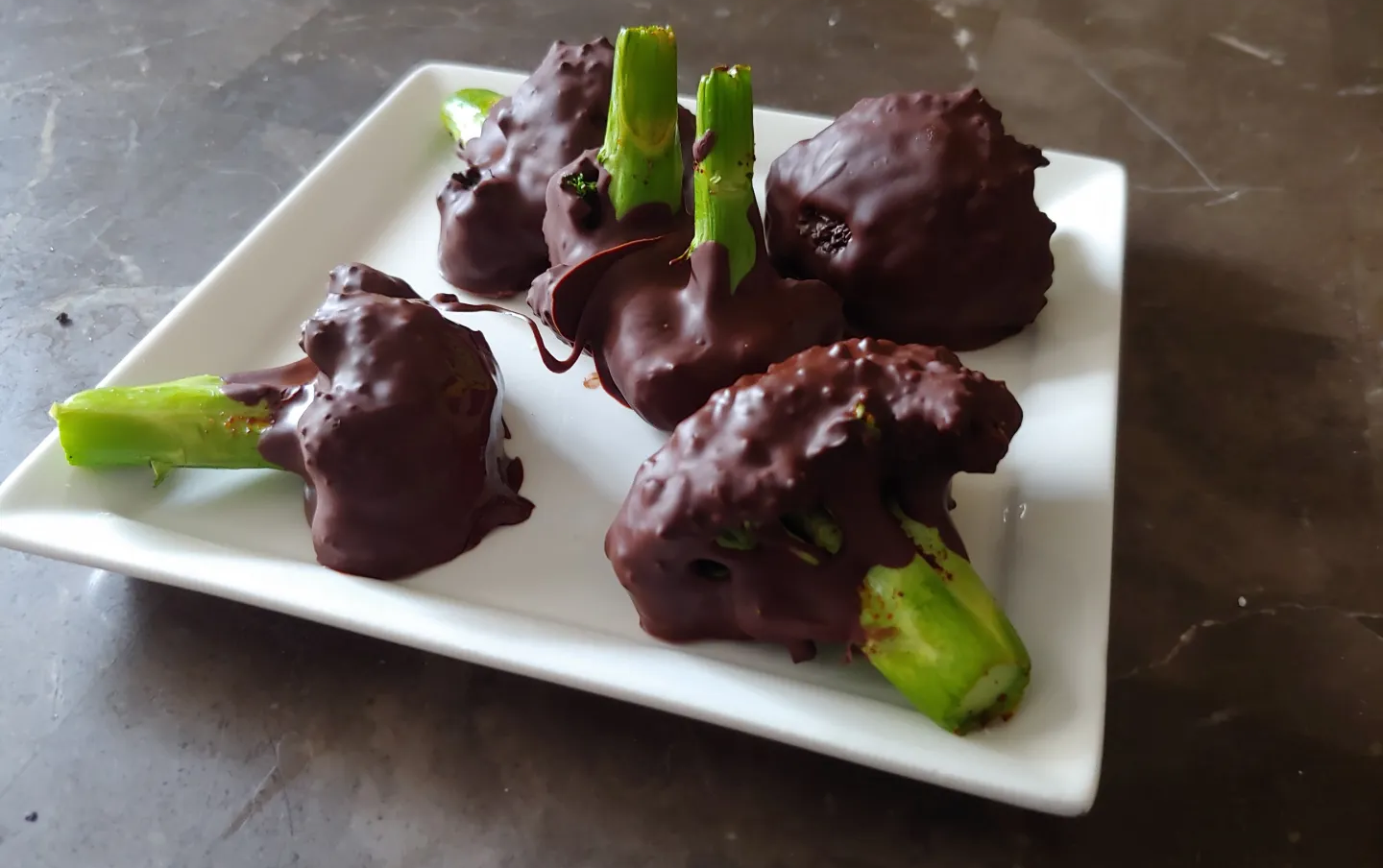
A saying about educational games that forget to be fun. Image source.
A JRPG without Combat
Something I had been interested in exploring further ever since finishing Aapeng: Hare Krishna was the idea of what I like to call a JRPG without Combat, a game employing the same gameplay and narrative techniques as your usual JRPG would, but without any battles or combat systems. I got the chance to do so with this game.
What role does combat serve?
Something I came to realize only after finishing Aapeng was that combat systems add a lot more to a game than mere gameplay variety.
Battles lend themselves well to interesting plot points and driving the story forwards, and having the player participate in the actual stakes not only adds more narrative weight through gameplay implications when losing party members or fighting a particularly tough boss, but it also means the player is constantly engaged, through looking for gold, EXP points, items and equipment. This is something you (almost) never had to do in Aapeng.
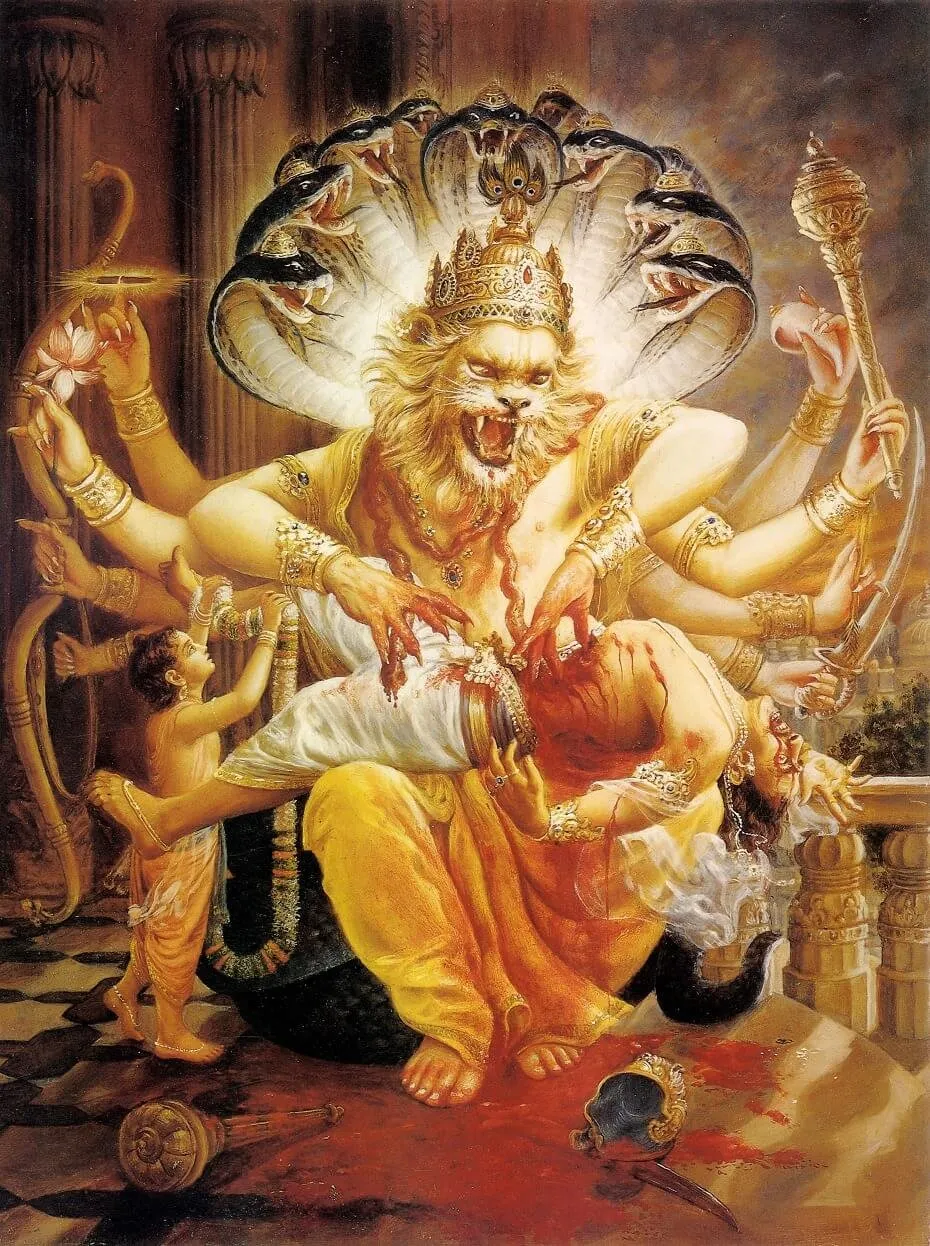
Narasimha of Hindu Mythology.
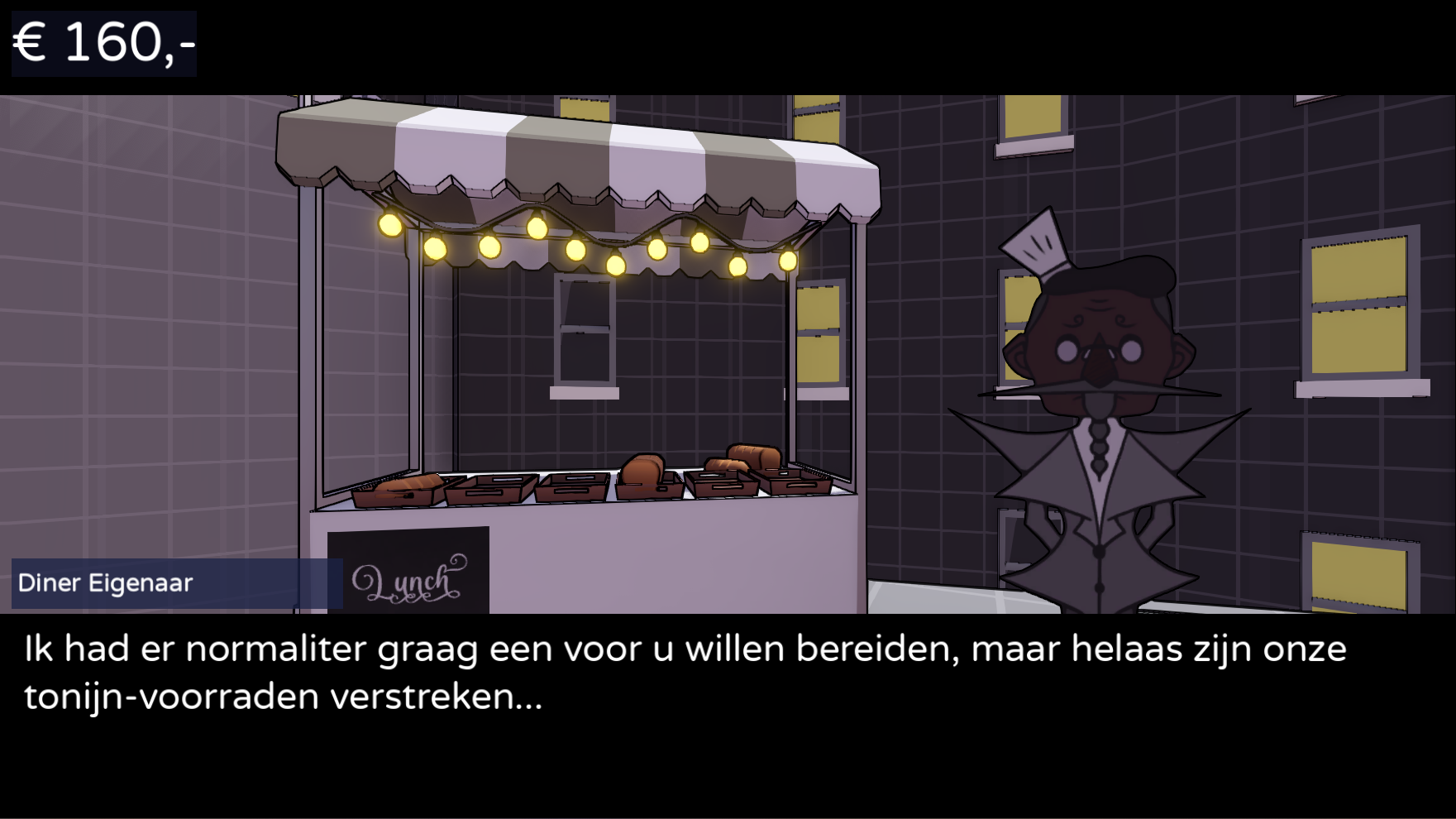
"I'd love to make one (sandwich) for you, but we've run out of our tuna-supplies..."
Engaging the player anyways
There's many ways to tackle this design challenge, but taking what I'd learned from playtesting Aapeng I narrowed it down to one thing; clear and direct short-term goals.
By constantly giving the player something they actively have to think about and work towards, they're forced to pay attention, and so our Quests were born.
Villages & Quests
I was responsible for coming up with the "quest" gameplay and storyline in each of our three explorable villages. I enjoyed designing little dialogue puzzles with our simple control scheme in mind, and early on settled on the following simple tasks; Earning money, finding a place to sleep and getting yourself a nice meal. With one task for each village, see our early moodboards!
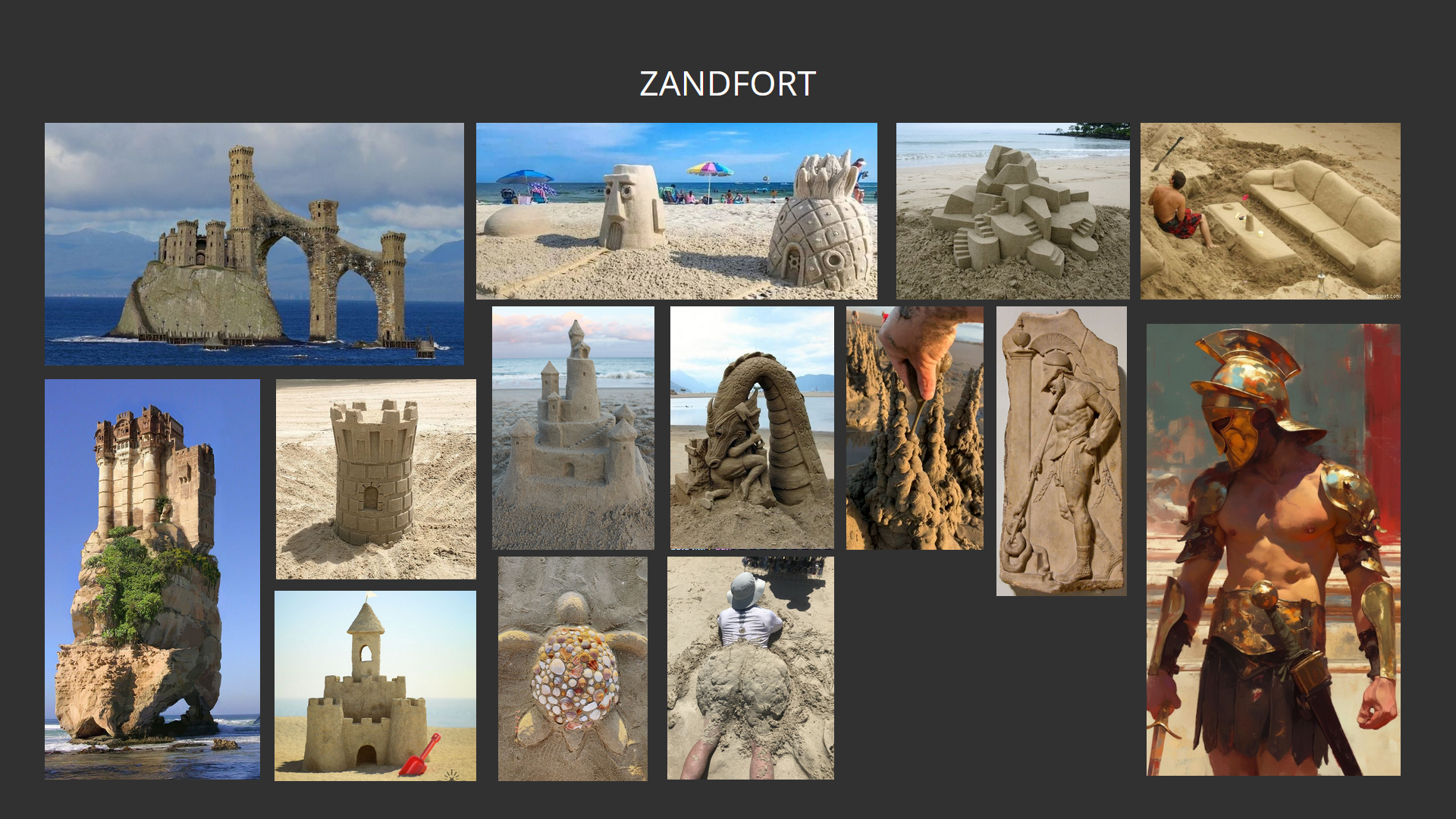
You need to earn money in the expensive Zandfort...
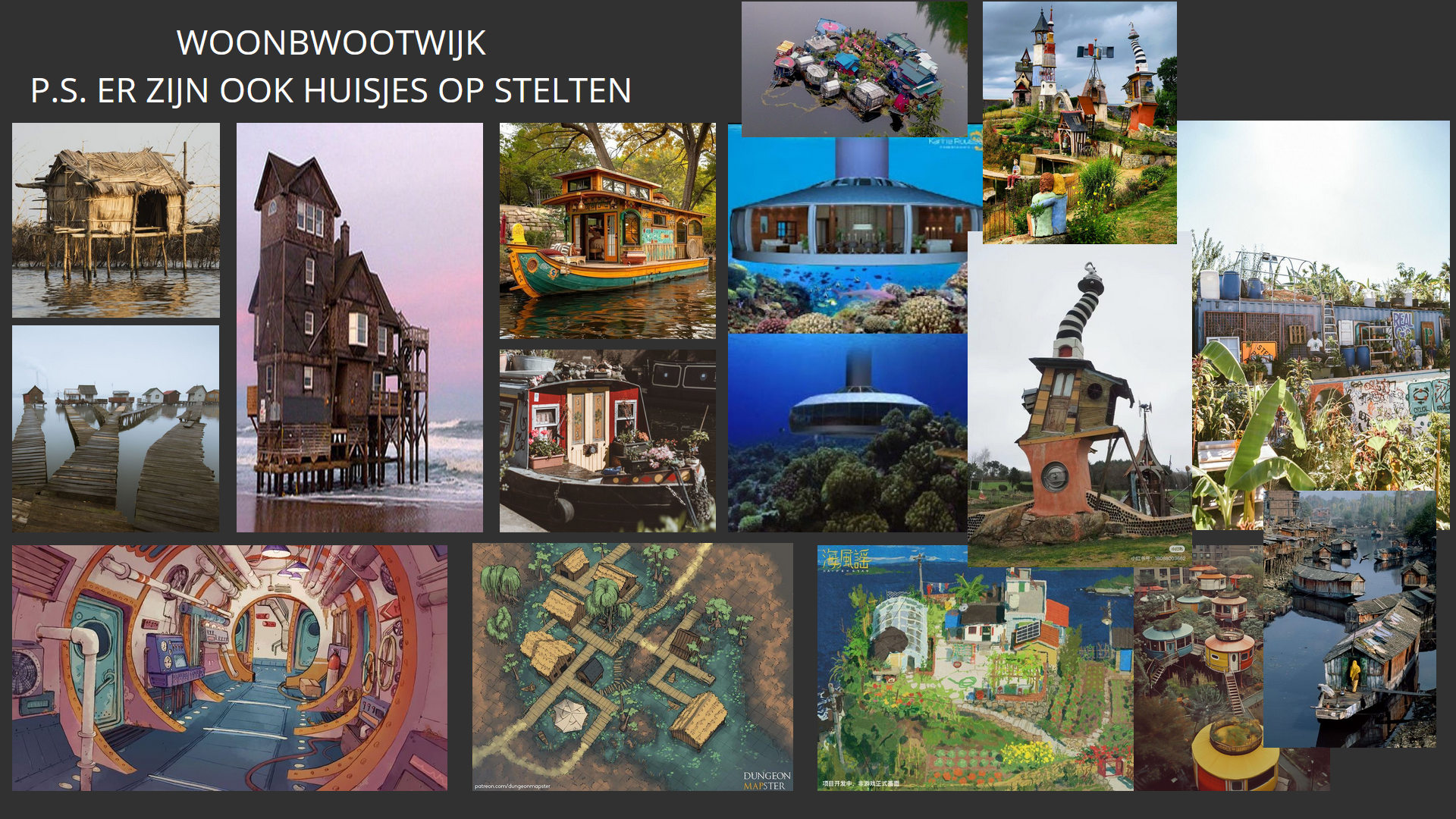
...find a place to sleep in the crowded Woonbwootwijk...
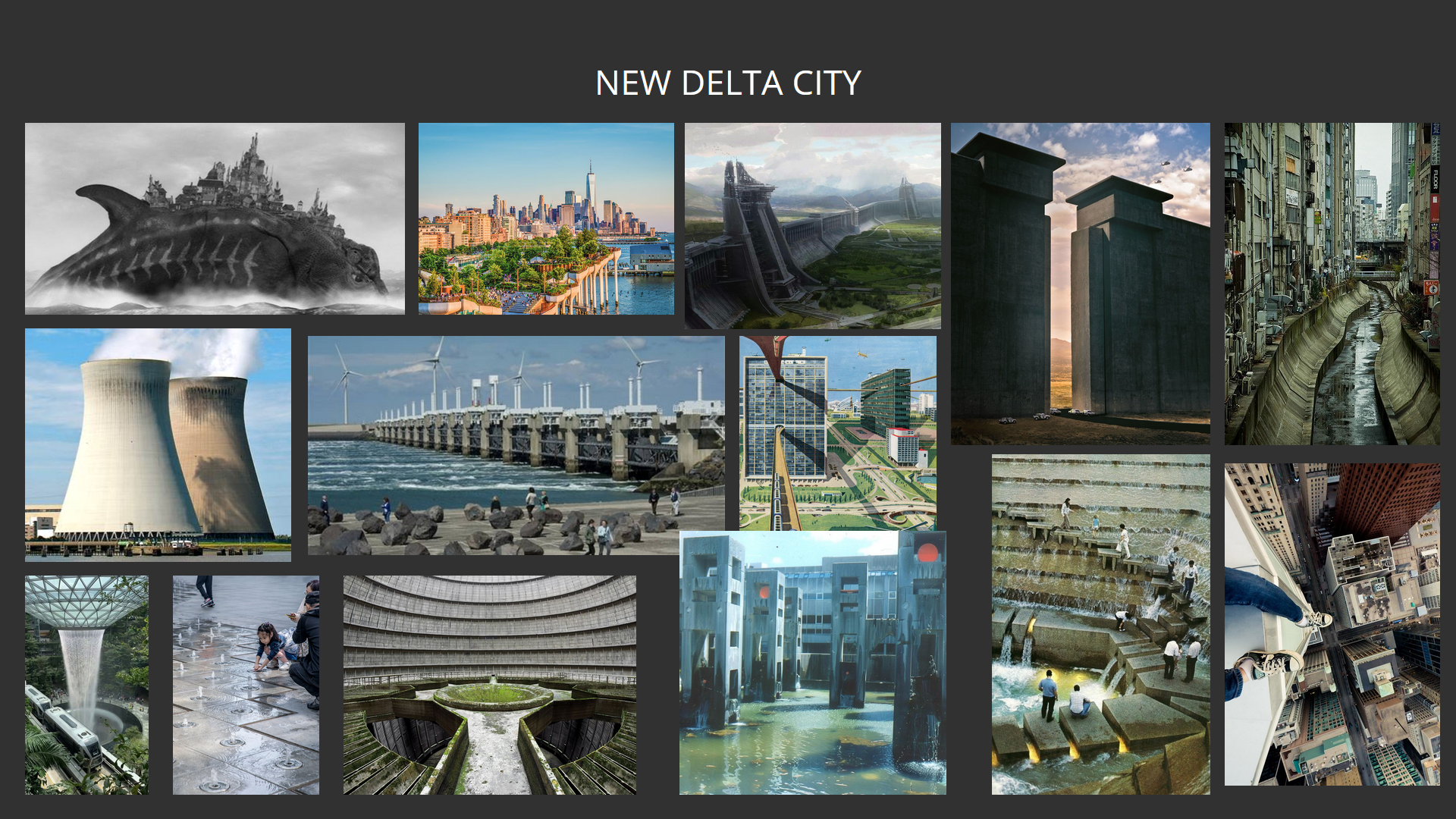
...and look for food in the scarce and hungry New Delta City...
Blockouts & Teamwork
Art takes time!
Due to not wanting to be bottlenecked in the writing and implementation process, I got to work on blockouts for all three locales. This helped us get a vision for where NPCs would be placed, and enabled me to get started on the quests and accompanying dialogue, and the other designer to get started on the automatic camera system.
Two of these blockouts made it into the final product, one getting revised halfway, and the final village ended up being made from the ground up by one of our artists due to it becoming too complex.
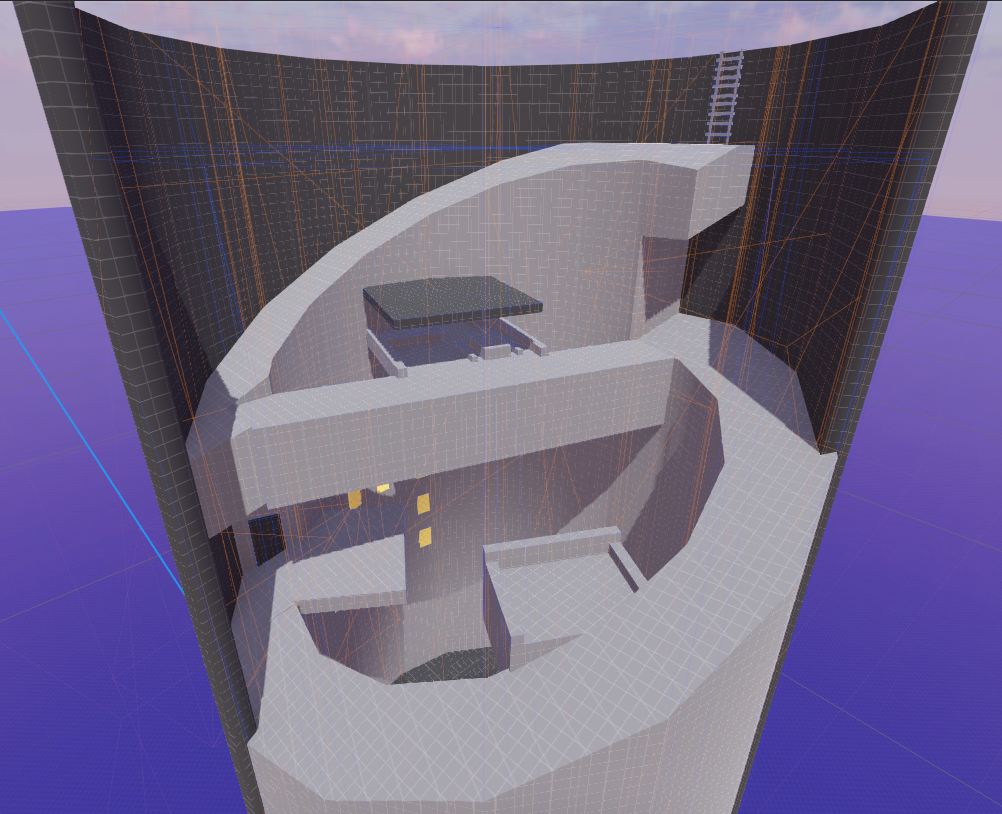
Here's my original New Delta City Blockout with a wall hidden, the camera system did not like this one, however...
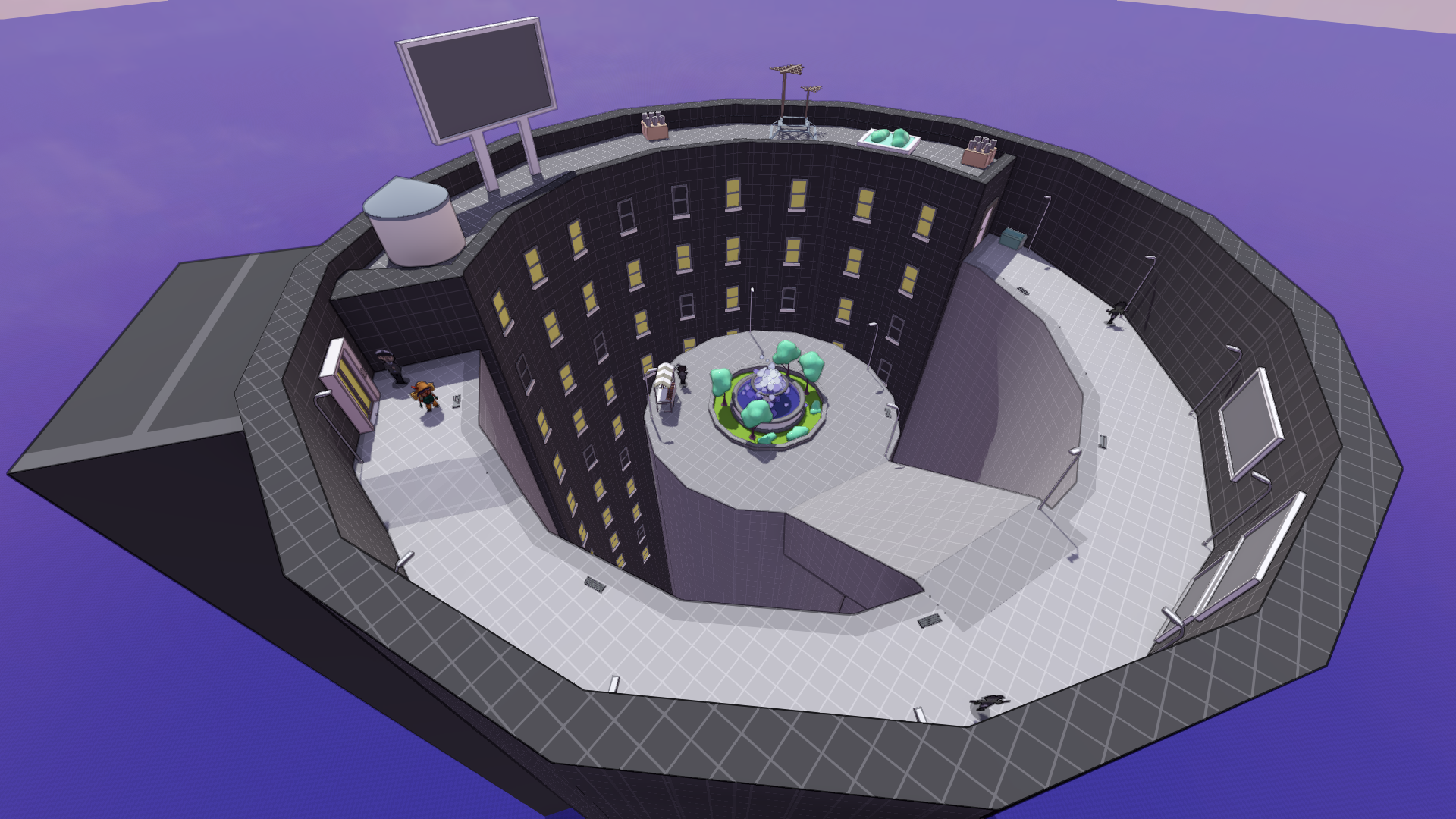
...and here's the updated layout! Much simpler with less pointless walking and downtime.
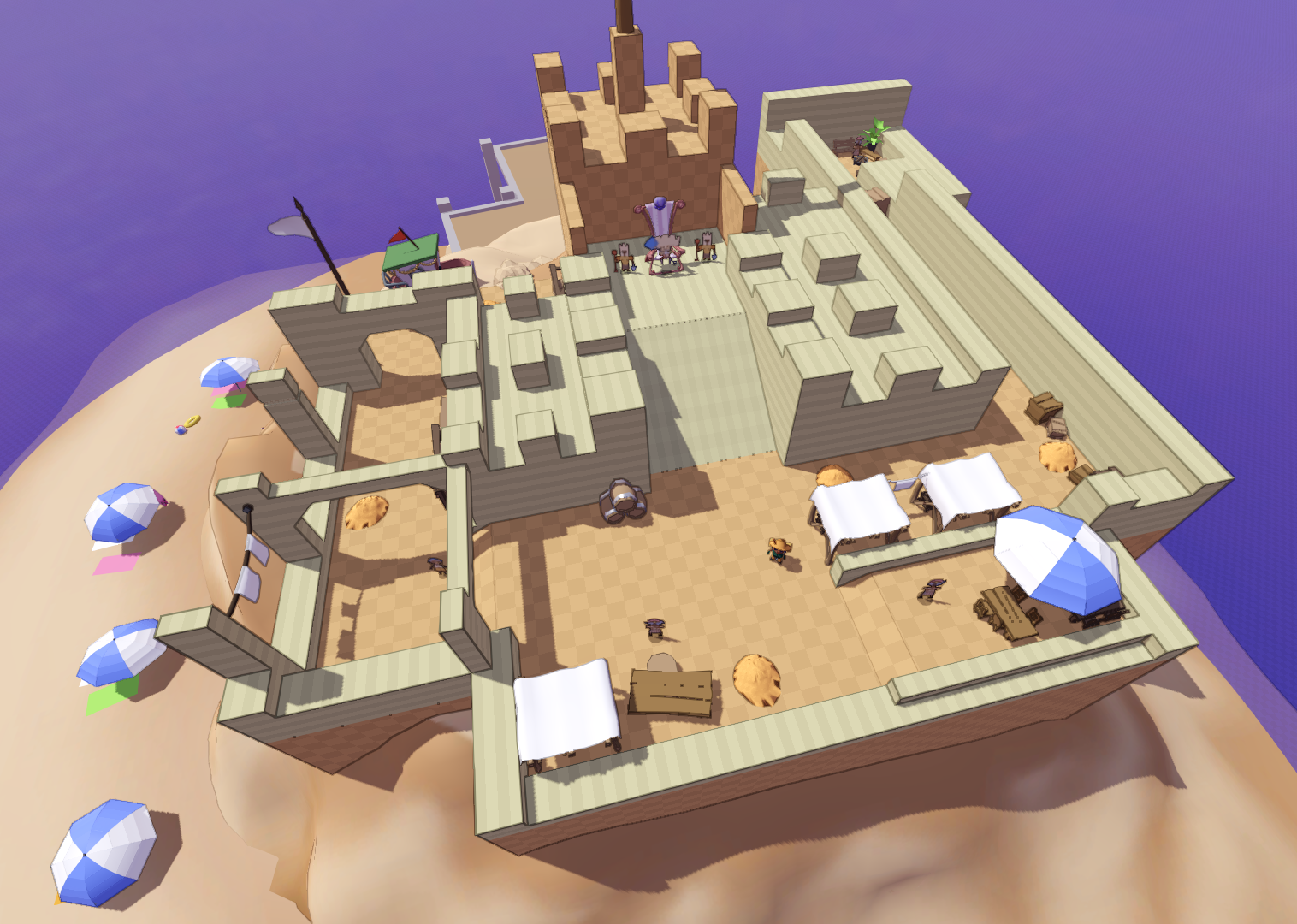
Zandfort's first version deviated from the blockout a lot, which broke a lot of systems and buried a few characters. Pictured here is the final product.
Feedback and Implementation
Something that went quite slowly and inefficiently was getting the art assets and maps in-game, as they were almost all shared through Discord and implemented by me, instead of all artists working in-engine themselves.
This led to many back-and-forths on two of the three maps, because they just didn't work in-game, like large and inconsistent height changes, making areas with NPCs in them inaccessible. This artist was always friendly and open to changes, but it was very slow going, and I eventually took upon rearranging some of the maps in Blender myself.
The Horrors of Woonbwootwijk
Woonbwootwijk was maybe worst of all, passages the player didn't fit through, incomprehensible scaling and a nightmare for the camera. The most difficult thing here was that I couldn't get started on the final NPC placings, invisible walls, or setting up the camera until the level was truly ready. This was the closest call when it came to something resembling crunch time, and only worked out because the other designer helped out with setting up the camera in Woonbwootwijk specifically.
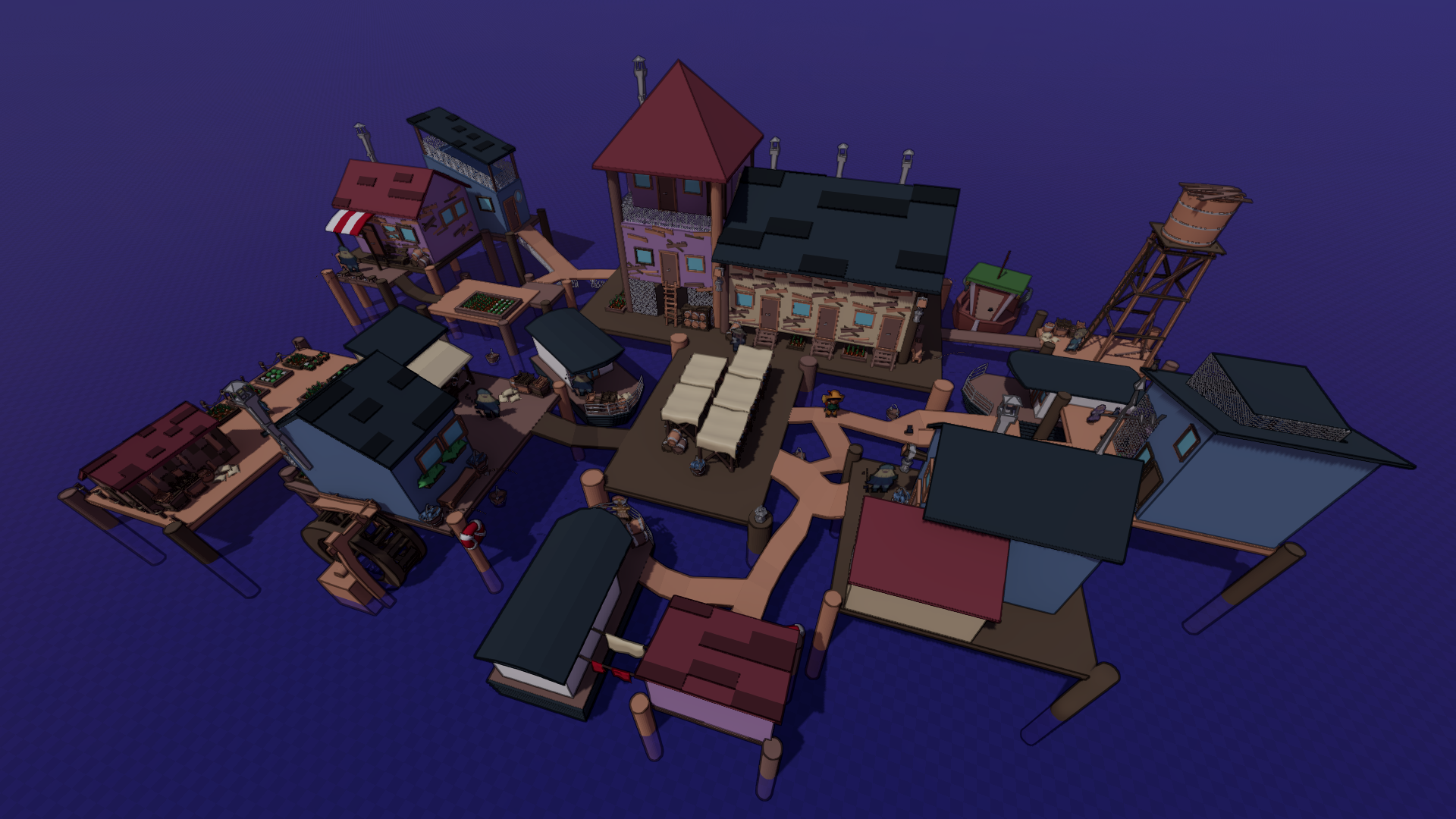
Woonbwootwijk consisted of narrow passageways and a tightly connected web of boats and wooden platforms, which for our environment artist was easier to make from the ground up directly in Blender.
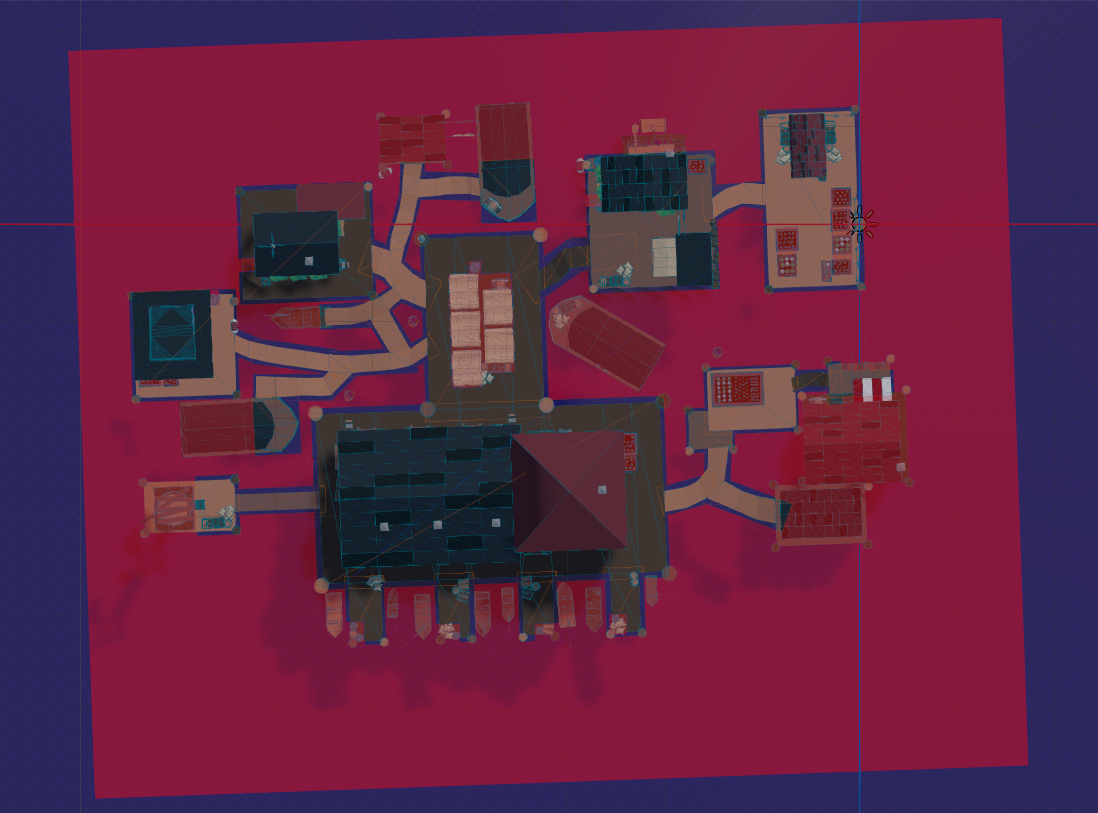
I spent forever placing and testing these invisible walls...
Post Mortem
This project was nice, people laughed at the jokes I wrote. We got really positive feedback on the game, with teachers and students both praising the writing, humor, art and impressive amount of content, and we even got a credits sequence in! The consensus being the game felt really complete, and like a vertical slice of a larger whole.
Despite some slight map related inconveniences near the end, our planning and division of labor generally went really well. All of my team members were driven and we all really enjoyed working on this game together. I also had a lot of fun making the song in Woonbwootwijk and fine-tuning the Main Menu, I'm so proud of that Main Menu...
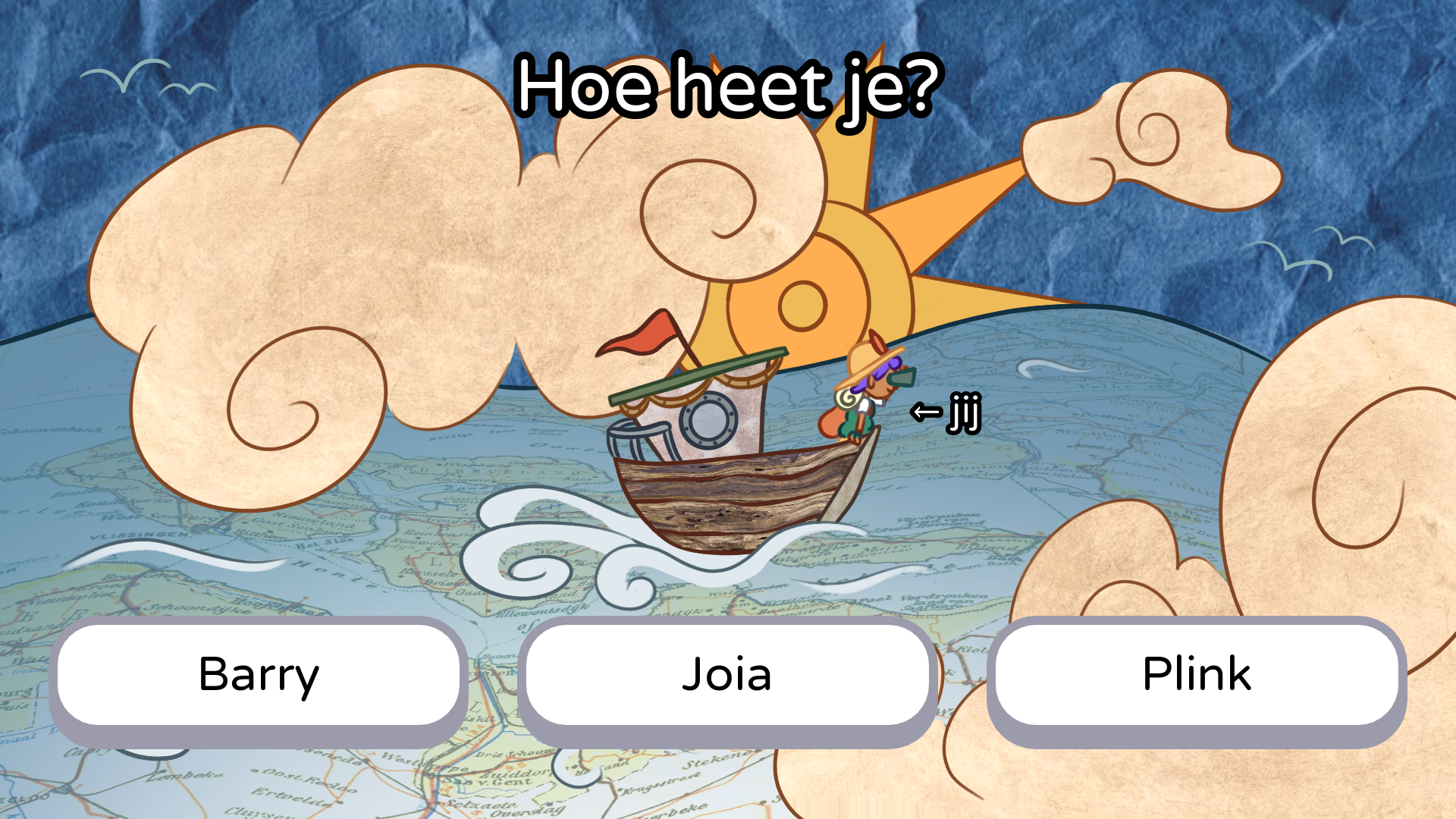
"What's your name? Barry, Joia or Plink?" - Art by the wonderful Ezra Spillekom.